
1. The "English-Only" Navigator
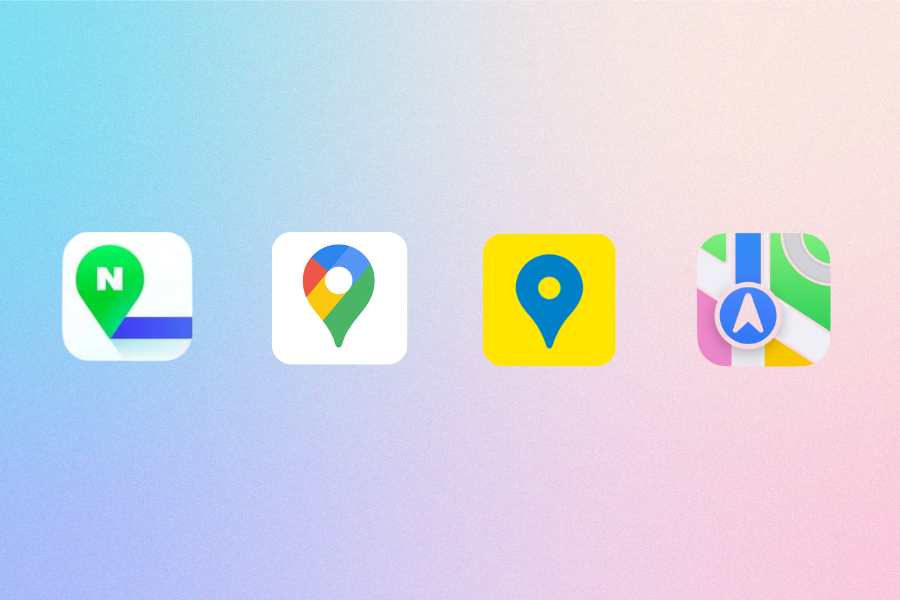
Google Maps and Apple Maps might be your best friend elsewhere, but in Korea, it lacks real-time driving navigation due to local data security laws. To avoid getting lost, you'll need the local "Big Two":
Naver Map or KakaoMap: Both apps offer surprisingly good English support. They will call out speed cameras, give you lane-by-lane guidance, and even warn you about upcoming speed bumps.
Pro Tip: Addresses can be tricky. Try searching for "Telephone Numbers" of your destination instead of the name—most Korean GPS systems (including our in-car units) can find a location just by its phone number!
2. Decode the Color-Coded Roads
One of the most helpful features for non-Korean speakers is the colorful paint on the asphalt.
Pink and Blue Lines: When approaching a complex highway interchange, your navigation app might say "follow the pink line". Just look down at the road and stay in the lane with that color—it will guide you through the exact turn you need to make without you having to read a single sign.
Blue Bus Lanes: Avoid lanes with a solid blue line; these are strictly for buses only. You can only enter these lanes when the blue line becomes "broken" (dashed) to make a turn.
3. The Toll Booth Trap
Highways in Korea are great, but the toll booths can be the most confusing part for tourists.
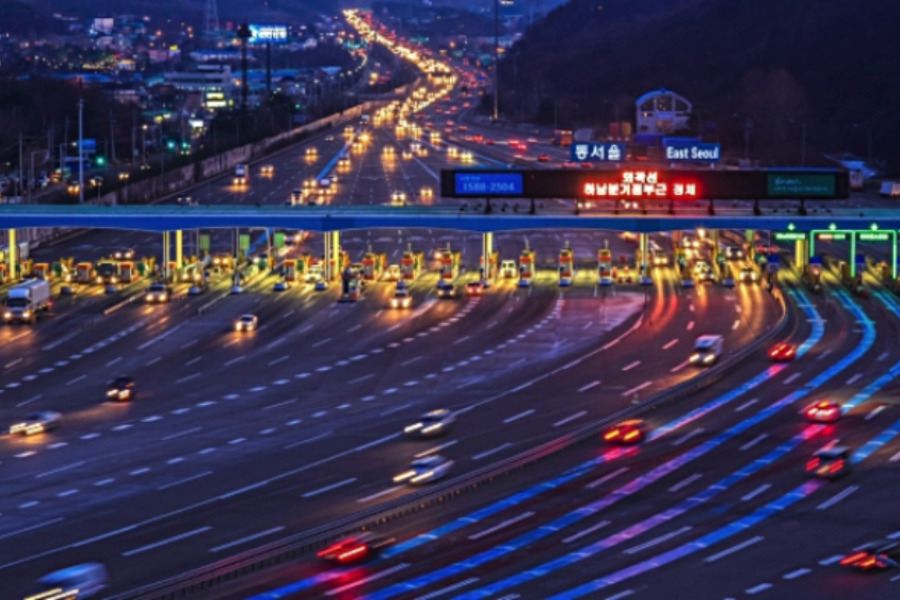
The Blue Lane (Hi-Pass): These are for cars with automated payment devices. If your rental car doesn't have a "Hi-Pass" device, do not drive through the blue lane.
The Cash Lane (현금): Look for the lanes without blue markings, usually on the far right. Look for the word "현금" (Cash)—even if you can't read it, these lanes are where you can pay a human attendant with cash or a credit card.
4. Right Turns on Red (With a Warning)
Korea generally follows "Right Turn on Red" rules similar to North America, but with a new 2024 twist:
The Full Stop: You are now legally required to come to a complete stop before turning right on a red light.
Pedestrian Priority: If there is a pedestrian in the crosswalk—or even just standing near it—you must wait. When in doubt, just wait for the light to turn green.
5. Mastering the Parking Signs
Finding a spot in the city can be tough, and parking tickets are a quick way to ruin a vacation.
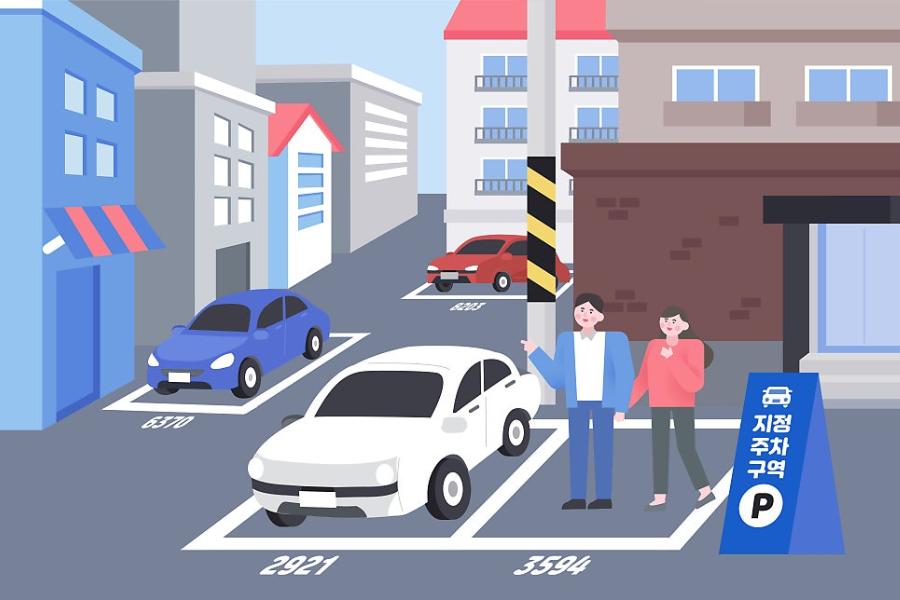
The Resident Only Zone: If you see a parking spot with a number next to it on the ground or a sign, it is for Local Residents Only. Your car will likely be towed if you park there.
Public Parking (공영주차장): Look for signs with "P" or a blue square. These are official public lots and are the safest and cheapest places to leave your car while you explore.
Ready to start your journey?
Want an English-ready car? 👉 [Book Your Tech-Enabled Rental with Orcar]